USGenWeb Project

KALAMAZOO  COUNTY, MI

GENEALOGY & LOCAL HISTORY
CELERY CULTIVATION

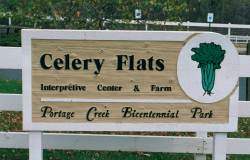
CELERY FLATS INTERPRETIVE CENTER

7335 Garden Lane, Portage, MI
1/4 mile east of South Westnedge Ave.
269 329-4522

The Portage Creek Bicentennial Park includes an interpretive center (open seasonally) dedicated to explaining the importance and history of  celery farming to region. In addition to the main building, the center has a  working celery farm area.(be sure to visit the Portage Creek Bicentennial Park page)

The Center features photographs, graphics, artifacts, equipment, and other materials connected with celery farming in Kalamazoo.

A guided tour is available for a small fee.

click on images to enlarge them

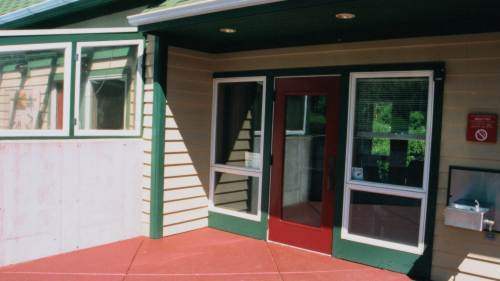
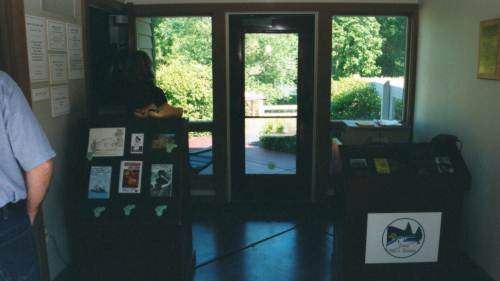
Entrance to the Interpretative Center


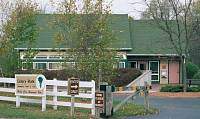
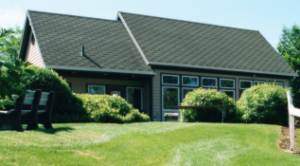
 The Interpretative Center Building

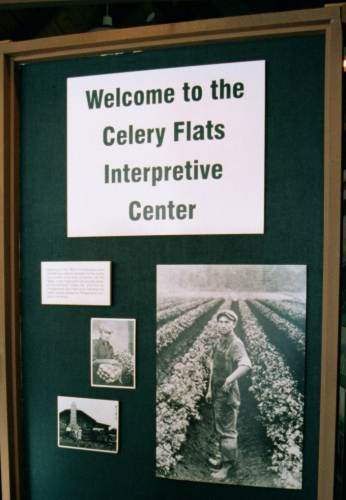
The lobby, where the tour begins

The beginning of celery cultivation and Dutch immigration:  stalk (Pascal) celery was not grown in Holland, just a celery flavored herb.  More important than experience with a particular type of crop grown, the Dutch brought experience with heavy wet soils and labor intensive one crop farming versus multi crop farming generally for home consumption.  (Also, see the DUTCH HERITAGE PAGE)


The Hard Work of Growing Celery

"It's no genteel, light work or child's play to grow celery." wrote Frank Little, Kalamazoo's first chronicler of the industry in 1886."The drainage and subjugation, cultivation, and gathering the crop almost entirely hand work from the commencement to the close is laborious in the extreme. "Kalamazoo County's many plats of wet muck land proved ideal for celery culture, but to transform the muck into miles of smooth and fertile gardens required extensive preparation. The pioneer celery growers, almost exclusively immigrants from Holland, first faced "a long and violent, or rather patient, wrestling with many and sundry tamarack stumps, above ground and below, willow and alder-brush, or the tough and wiry massasauga grass."  


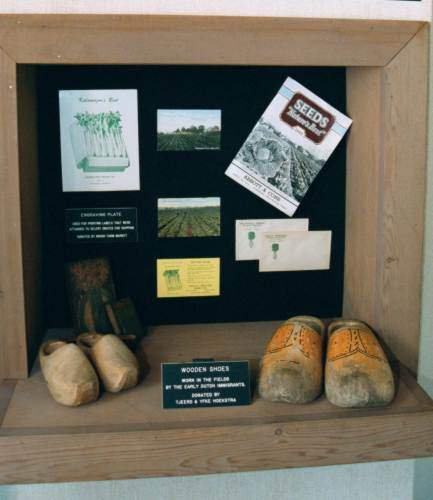
Wooden Shoes
Useful for working in the muck of the celery fields.
For horses too.
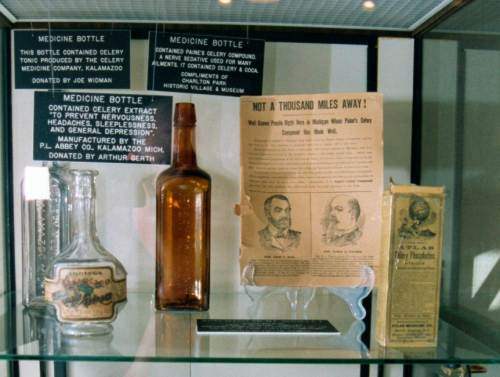
Wooden shoes and one of the patent medicines created from celery in the heyday of celery before WWI.

click on images to enlarge them

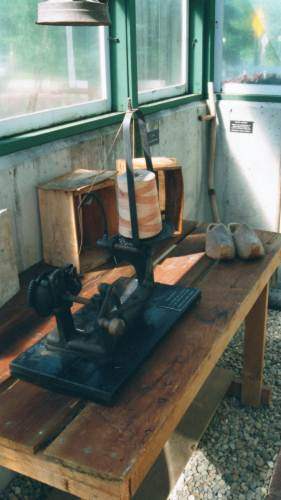
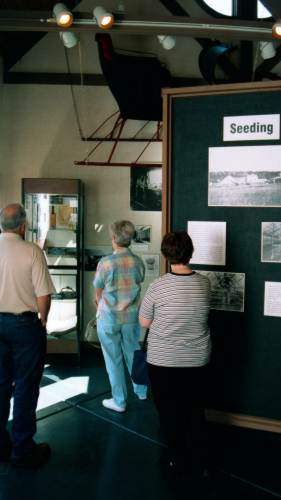
Explaining old equipment


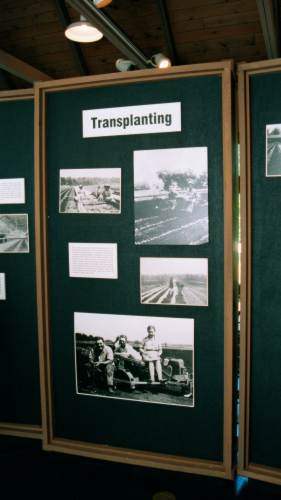
The labor intensive nature of celery farming is described in the displays for seeding, transplanting, and blanching.


Celery Seed
   

 The cycle of the celery season began with the seed. Seed, so minute that one ounce  could yield up to 10,000 plants, was started in shallow pans that were kept indoors in a warm damp environment. By the early twentieth century when improved technology and now varieties of celery permitted marketing by June, some grower started seed for the first crop in early February, traditionally on Ground Hog's Day.

Most commercial growers also maintained their own greenhouses. Small greenhouses covered with removable sashes and heated by a small wood, coal, or later fuel oil stove were widely used in Kalamazoo County. After evenly distributing the seed in elevated seeds beds within the greenhouses, a layer of burlap was laid down. This was kept well sprinkled.


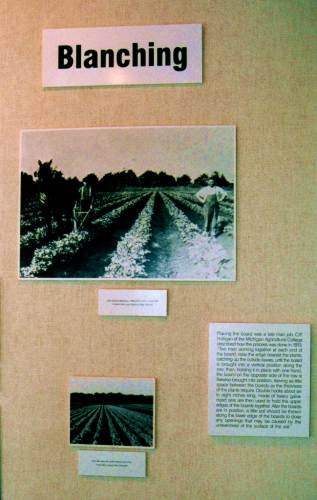
Blanching Celery

The type of celery grown in Kalamazoo County required blanching or, as it was sometimes called, bleaching. The blanching process excluded sunlight from the celery stalks and produced an effect similar to what occurs to grass that has been covered with a board for several days. Blanching "promoted flavor, crispness and tenderness in edible leaf stalk, by destroying the green coloring matter and reducing the amount of fibrous tissue present."

After eight weeks of growing in the open fields, providing the weather was cooperative, celery was ready for the blanching process. By the 1880's this was accomplished in the Kalamazoo area by the use of boards. Hemlock or white pine boards one inch thick, 12 inches wide and 12, 14, or 16 feet in length were lugged into the fields and places end to end and along the rows.


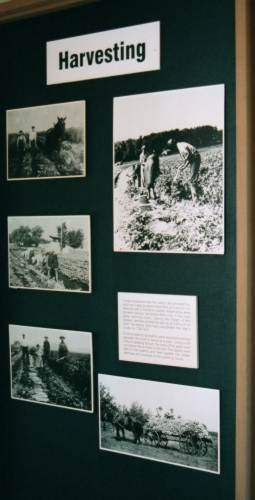
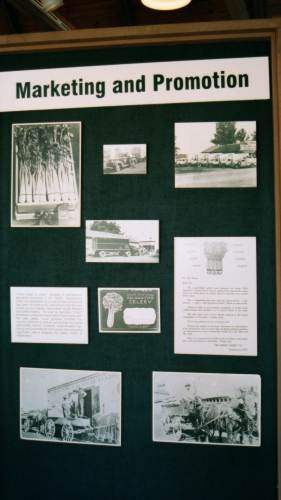
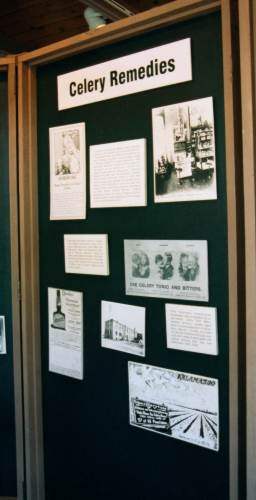
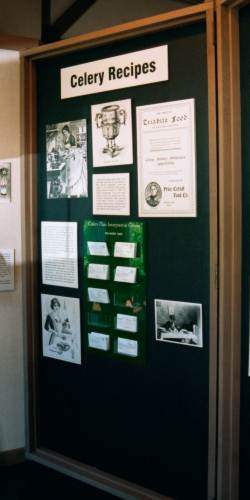
Other aspects of celery cultivation is explained in the displays for harvesting,  marketing, recipes, and the old use of celery for medicinal purposes.


click on images to enlarge them


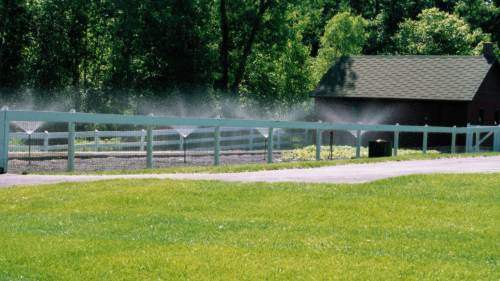
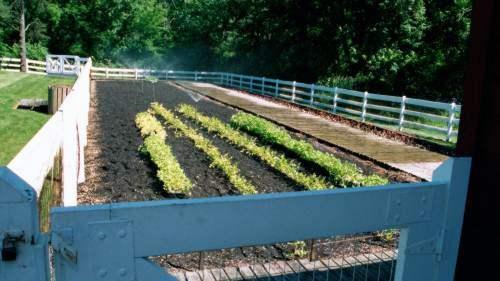
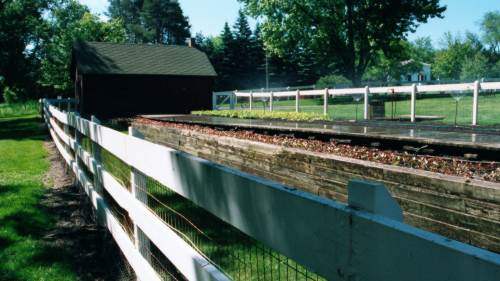
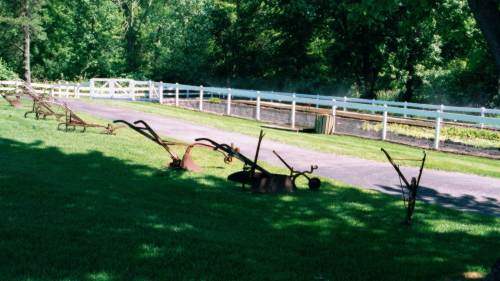
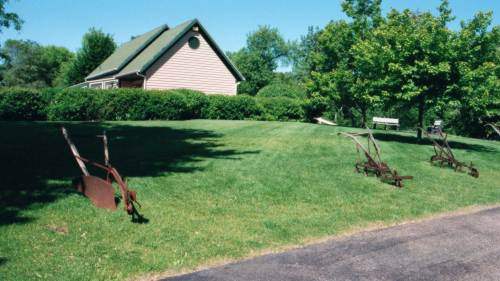
Near the Interpretative Center is a working celery farm.

click on images to enlarge them

celerya3workingview.jpg (228690 bytes)  celerya3farmfield.jpg (216764 bytes)

celerya5fieldback.jpg (222191 bytes)  celerya4plows.jpg (224701 bytes)  celerya6plowcenter.jpg (228675 bytes)

returning to the Interpretative Center


LINKS

Offsite Links
Where did celery come from

Celery Production in Michigan

Celery Historical Marker

Celery in Comstock


Other Pages On This Site
Celery Cultivation In Kalamazoo Dutch in Kalamazoo
Celery Flats Interpretive Center George Taylor's Recollection's
The man who started celery cultivation in Kalamazoo.
Celery Growers and Shippers in Kalamazoo Portage Bicentennial Park
Celery Image Gallery  

Return to Kalamazoo Co. Michigan USGenWeb page

All rights reserved.
This site may be freely linked to but not duplicated
in any fashion without my consent.
The information on these pages is meant for personal genealogical
research only and is not for commercial use of any type.

TOP